
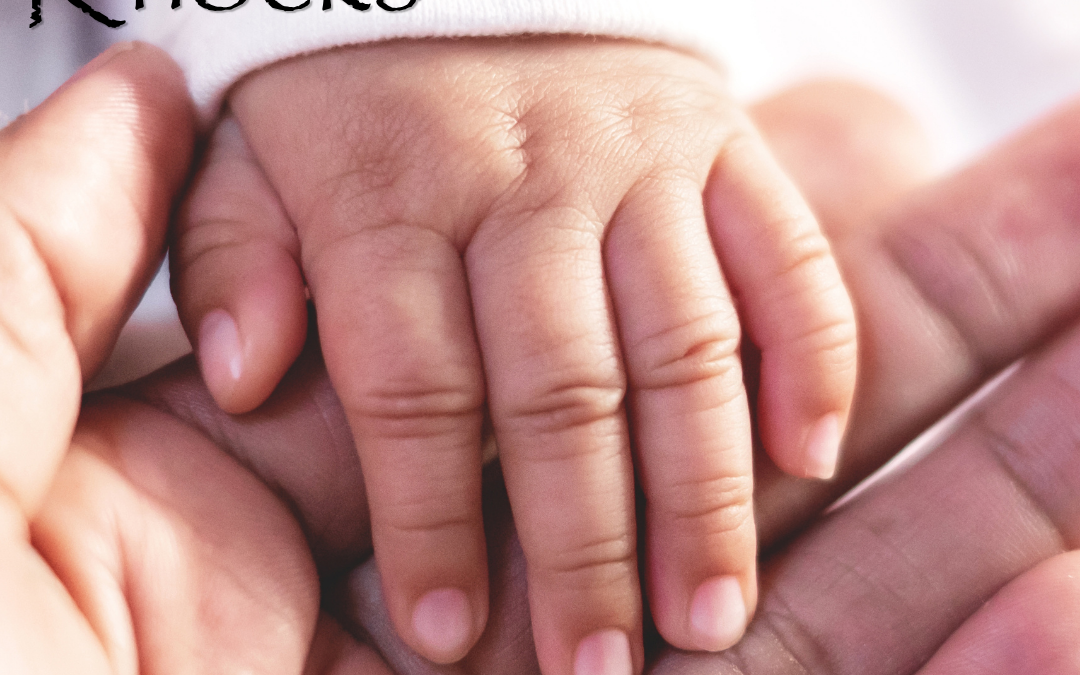
It is not the first cry of my new baby that I most remember. It is the one that came after the doctors had left, the nurses had returned to their rounds, and my husband had stepped out in search of something to eat.
Just me and the kid, alone in the room. My heart full of nostalgia for this precious babe, I breathe in the peace of the moment. I cannot wrap my head around the gift I have been given. I memorize his little nose; I caress his tiny hands; I am convinced that I am looking at a miracle. Exhaustion from the day’s events fully realized, I close my eyes for a moment—until a sharp screech slices the aura from across the room.
Is he hungry? Does his diaper need changing? What do I do now?
Suddenly, it is apparent that everything is going to be different.
When Jesus disrupts the Festival of Tabernacles in John 7:37-39, he is speaking to a religious community that is clinging desperately to a providential view of God. They worshipped in search of fruitful harvests, healthy families, and a plentiful catch. But Jesus comes proclaiming that such transaction will never quench their thirst for a flourishing life.
The people may be honoring God with word and action, but they have not experienced a change of heart to live fully in sync with God. Through disruption, Jesus introduces them to the Spirit.
Disruption is actually a huge part of my life. I’m usually late to meetings because I cannot walk to my car without six people needing something. I have a reputation for sending late-night emails because the witching hours—after my family is asleep—are often the only time I can find in the day to put together an intelligent thought. People beep at me at stoplights because I’m often talking to the panhandler long past the point the light turns green.
My son—now 14—also gets a dose of disruption every evening when we take long walks together. He has lots to tell me about his day, the fantasy worlds he is building, and the latest topic he has been Googling. But he’s growing accustomed to pausing his thought when we stop to visit with the unhoused friends we meet along the way.
In its own way, the comfort I have developed with disruption is itself a disruption to others. But it is the people perceived as the most disruptive who have taught me the value of a good disruption.
There are things in scripture I would have never considered without the chance to discuss them with unhoused neighbors in a Sunday morning Street Church service. I wish the world could be a fly on the wall for the ways my differently-abled friends love God and one another.
Forgiveness becomes transformative when extended to the same person 490 times. But it is even more powerful when you are on the receiving end of a neighbor who forgives the ways your own humanity stepped out of sync with the love of God.
I’ve come to appreciate that the person who stops me in the parking lot or the call I get to check on someone is the farthest thing from a nuisance. It is simply the Holy Spirit keeping me in check.
As a new mother, I knew that a child would add to my life, both in responsibility and joy. Naïvely, I imagined that addition would settle on top of everything that already was. Instead, it turned my world upside down.
I didn’t know it at the time, but the earth shifted on the night my son was born. All the things I thought I was were jostled loose from the comfortable shelves in my heart; the aftershocks thereafter would profoundly reshape my existence in the world.
God continues to move that furniture around in the living room of my soul. The drapes are adjusted about every week, and the paint colors might change at least once a month. There was a time these things would bring so much dread—enough to cower in the corner under a blanket until the interior decorator had left. In recent years, I race to the door with excitement.
I know, when disruption comes knocking, the Spirit is on the move.
– Dr. Meghann Cotter
Executive Servant-Leader
Micah Ecumenical Ministries