
My first apartment was in downtown Fredericksburg.
On a daily basis, especially when it was warm out, many people would walk up my street to access the nearby Canal Path.
It was not until I began volunteering at a community dinner, hosted by a downtown church, that I noticed one particular man who walked by nearly every day, even when it was cold outside.
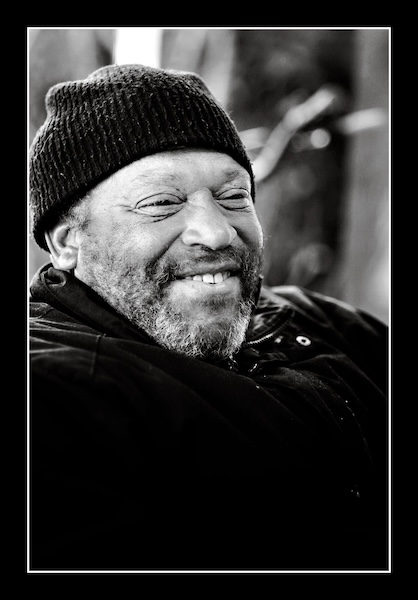
Lamont was a big burly guy. He didn’t carry a lot with him, but the one bag he did have was often overloaded, dirty, and torn, but patched back together in places. His shoes were often mismatched, and he wore them without laces. I would later learn he did that because his shoes didn’t fit, and laces kept him from stretching them out to accommodate his feet.
As I got to know him, he would stop to talk to me when I was working in my yard. He had some interesting ideas about spacecraft, where he was headed and what kind of jobs he could get. I enjoyed talking to him, but I remained troubled that I had never noticed him before I started serving meals.
I was sure his walking pattern was not new.
I was sure he had passed by my house for many months prior.
But my eyes had never engaged him the same way they did the joggers, people walking their dogs, or parents out bike riding with their kids.
I had not noticed him; nor had I noticed what other people were seeing.
He talked to himself and sometimes sang. He had some wild stories, and his telling of them was usually hard to follow. Relationship opened my eyes to his many struggles; but it also revealed the judgment of others.
“It’s terrible what some people do to themselves,” one man said, implying that he had fried his brain with drugs.
“What do you think he did that his family no longer wants him?” or “Can you believe a family would let someone live that way?” asked others.
None of those asking questions had taken the time to know the man’s circumstances or even his name; and yet, the only thing they noticed was that he was a disruption.
These are the moments I wonder if we have learned anything since Jesus walked among us. Just as the disciples once probed what personal or parental sin caused a man’s lifelong blindness (John 9:1-41), society still evaluates human worthiness as individual or familial failure. Rarely do we turn the inquisition on ourselves.
As Jesus teaches the disciples, disability, vulnerability, circumstantial concerns are not a result of sin or failure; but that “the works of God may be revealed.”
How might our world be different, if all the assumptions about our differently-abled neighbors became a curiosity for what God is doing?
Instead of assuming our neighbors in tents must not want housing, we might reconsider how policies, resources and systems in our control could ensure that no one had to live outside.
For those still resistant, we could seek to understand what environmental design would work for them—tiny houses, detached walls, rooming houses, who knows what we could come up with.
Rather than wondering how someone who struggles has burnt bridges with all the people who should love them, we could invest energy in how we love them.
Instead of assuming their parents dropped the ball, we could have a hard conversation with ourselves about the wide wilderness that exists between familial capabilities, personal limitations and the expectations of public systems; and we could work to bridge the gap.
I’m still mesmerized how many people do not know or have not shared my awe for what happened with our unhoused neighbors during the pandemic. For two and a half years, there were enough emergency resources coming into our community that no one had to sleep outside. There were just two people that outright refused to accept a room; and we worked to accommodate them otherwise.
For a moment in our community’s history, we functionally ended homelessness; but there was no rejoicing, no motivation to keep the movement going, and very little media coverage that we did not create ourselves.
As a street outreach ministry for most of our existence, Micah had a lot to learn about sheltering people. One of the most important lessons was how much easier it was to care for people—even those with complex mental and physical disabilities—when they were settled in a hotel room vs. surviving the elements.
We also proved that most people who live outside would accept accommodations if the environment was not triggering. Many of our neighbors reject congregate spaces, including the cold weather shelter, because they have been over-institutionalized in jails and hospitals. They cannot handle close quarters, lots of people or conflicting personalities.
The benefits of pandemic hotels made it possible for more exits to permanent housing than we had ever seen. But time and resources were not on our side to ensure everyone we had sheltered could exit to permanent housing.
As the pandemic evaporated, some people returned to the street. Part of me hoped it would jolt the attention of people with power and influence, that it would prompt a response for hotel sheltering to become a new normal.
The return of visible homelessness in our community did grab people’s attention, but not in the ways we hoped.
We were begging people to see the possibilities, to recognize the incredible thing that happened and their power to keep it going. The community assumed homelessness had suddenly exploded, when in fact the only thing they were noticing was that they had not noticed the miracle that had occurred while everyone was sheltering in place.
The questions we lived in before the pandemic returned: “How could we help get people out of the way?”
I’m told it was just bad timing for a miracle. Local governments and other people in power were preoccupied by too many other things. It was hard to find the bandwidth for something new.
But the works of God have not ceased to be revealed in the sick and vulnerable among us.
Though we have been blind, we now see what is possible. And with great sight comes great responsibility. Maybe our lenses need adjusting. Perhaps we need bifocals or cataract surgery; but the call remains: drawing closer to God through proximity to one another.
– Meghann Cotter
Executive Servant-Leader
Micah Ecumenical Ministries